
Top 5 Powerful Reasons JL9 Blockchain Builds Digital Trust
Are you searching for a breakthrough in decentralized technology? The revolutionary JL9 Blockchain network is officially here to transform how we secure data and execute smart contracts globally.
In a digital ecosystem filled with congestion and soaring transaction fees, finding a platform that balances speed, security, and scalability is rare. JL9 addresses these exact pain points, offering a fresh architecture designed for enterprise-grade adoption and seamless user experiences.
Understanding the Architecture of JL9 Blockchain
To truly appreciate what makes this platform unique, we must look beneath the surface at its foundational layer. Traditional distributed ledgers often suffer from the “blockchain trilemma”—the structural challenge of achieving security, scalability, and decentralization simultaneously without compromise. By introducing a completely redesigned network topology, the JL9 Blockchain network effectively neutralizes these historical limitations.
Advanced Consensus Mechanism

At the core of the JL9 Blockchain protocol lies a proprietary consensus engine. Unlike energy-intensive Proof of Work (PoW) or standard Proof of Stake (PoS) systems that favor wealthy validators, this framework utilizes a hybrid validation model. By combining cryptographic proof of history with a dynamic reputation metric, the network processes thousands of transactions per second (TPS) without compromising environmental sustainability.
Furthermore, the mathematical design of the JL9 Blockchain parameters prevents common vector attacks, including 51% computational takeovers and Sybil vulnerabilities. This guarantees that every block added to the ledger maintains mathematical certainty, offering a level of absolute cryptographic immutability that modern global enterprises require for daily operations.
Sharding and Scalability Parallelism
How does the network maintain a sub-second block finality? The answer lies in adaptive state sharding. The core ledger automatically divides into smaller, manageable pieces called shards. Each shard processes its data pipeline independently, meaning the overall throughput of the network increases linearly as more nodes join the ecosystem.
Through this intelligent distribution, the JL9 Blockchain mechanism guarantees that network congestion on one application will never slow down the operational capacity of another adjacent smart contract on the same ledger.
Key Features That Distinguish the JL9 Blockchain Protocol
When building modern decentralized applications (dApps), developers require robust documentation and highly flexible smart contract capabilities. This network delivers on both fronts, providing an optimized environment for continuous web3 innovation.
Multi-Language Smart Contract Support

Most legacy platforms force developers to learn entirely new programming languages just to launch a token or an application. The JL9 Blockchain architecture breaks down these barriers by integrating a multi-language virtual machine. Whether you write code in Rust, Go, C++, or Solidity, you can deploy your logic safely using their standardized compiler suite.
By eliminating the steep learning curve associated with proprietary coding frameworks, the JL9 Blockchain developer ecosystem drastically reduces the time-to-market for early-stage software startups and corporate development groups alike.
Zero-Knowledge Privacy Frameworks
Data privacy is no longer optional; it is a fundamental requirement for modern enterprises. By embedding Zero-Knowledge Proofs (ZKPs) directly into the protocol layer, the JL9 Blockchain system ensures users can verify ownership, identity, or financial transactions without revealing sensitive underlying data to public observers.
- Public Verifiability: Anyone can audit the cryptographic validity of a block.
- Private Implementation: Individual wallet balances and operational details remain completely shielded.
- Regulatory Compliance: Programmable compliance tools allow selective disclosure for institutional audits.
Real-World Applications and Web3 Ecosystem Use Cases
A technology is only as valuable as the real-world problems it solves. The versatility of the JL9 Blockchain framework allows it to seamlessly integrate into various global industries, driving disruption across legacy software workflows.
Decentralized Finance (DeFi) Evolution
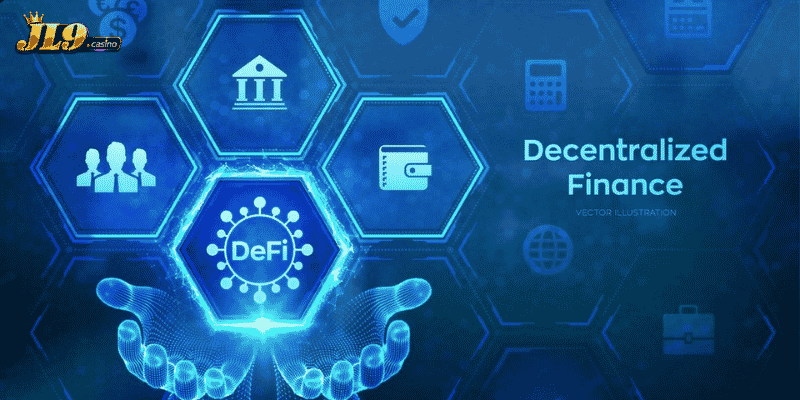
High gas fees and slow execution speeds have historically limited mass DeFi adoption. With optimized micro-fees and instant settlement, this protocol serves as the perfect foundation for next-generation automated market makers (AMMs), decentralized lending protocols, and algorithmic stablecoins. Users interacting with the JL9 Blockchain infrastructure experience near-zero slippage, allowing for complex financial instruments to be traded fluidly without intermediaries.
Next-Gen Supply Chain Traceability
From pharmaceuticals to luxury goods, proving authenticity is vital. By leveraging immutable data streams, the JL9 Blockchain network enables manufacturers to track raw materials from their origin point straight to the consumer shelf. Every handoff, temperature shift, and quality check is written permanently onto the ledger, eliminating counterfeiting entirely and fostering unprecedented transparency between consumer brands and their global audiences.
How to Integrate and Build on the Network
Transitioning your existing digital infrastructure over to a decentralized framework might seem intimidating, but the developer onboarding pipeline makes implementation highly intuitive.
Step 1: Accessing the Developer Testnet
Before launching a live application, creators can leverage a fully sandboxed test network environment. Here, you can request test faucet tokens, simulate high-stress user loads, and debug your smart contracts without spending actual assets. The JL9 Blockchain test environment mirrors the main ledger perfectly, giving teams accurate telemetry data regarding execution costs, state growth, and synchronization speed.
Step 2: Utilizing Native SDK Tools
The ecosystem provides comprehensive Software Development Kits (SDKs) tailored for web, mobile, and desktop integration. This simplifies the process of connecting standard frontend user interfaces to backend decentralized nodes. Because the JL9 Blockchain engineering toolkit includes pre-built modules for identity verification and wallet connectivity, software engineers can transition from concept to functioning prototype in a fraction of the time required on older platforms.
The Strategic Vision for Global Scaling
Looking forward, the roadmap for this technology focuses heavily on interoperability and community governance. The goal is not to isolate themselves from other major protocols, but rather to serve as a high-speed highway connecting fragmented ecosystems. The JL9 Blockchain roadmap emphasizes that cross-network communication will be the primary catalyst for mass industry adoption over the coming decade.
Cross-Chain Bridges
True decentralization requires open communication. Through secure cross-chain communication protocols, the JL9 Blockchain network allows users to seamlessly transfer assets and data between this ledger and older networks like Bitcoin or Ethereum without relying on risky, centralized third-party custodians.
Decentralized Autonomous Governance (DAO)
The future direction of the network rests entirely in the hands of its community. Token holders can propose structural updates, vote on protocol adjustments, and allocate ecosystem treasury grants to promising new startups building on the infrastructure. The JL9 Blockchain governance matrix ensures that no single entity can exert unilateral control over the protocol’s development vector.
Why Investors and Developers Prefer This Ecosystem
When evaluating long-term viability, tech analysts look closely at tokenomics, developer retention, and overall structural efficiency. The JL9 Blockchain framework consistently outperforms industry benchmarks across all three categories.
| Performance Metric | Traditional Ledgers | JL9 Blockchain |
| Transaction Speed | 15 – 50 TPS | 50,000+ TPS |
| Average Cost | $2.00 – $50.00 | Under $0.001 |
| Finality Time | 5 to 30 Minutes | < 1.2 Seconds |
| Energy Footprint | High | Ultra-Low (Eco) |
Deep Dive: Long-Term Economic Sustainability
Beyond sheer technical speed, any ledger hoping to survive long-term must establish a balanced economic engine. The tokenomic framework running inside the JL9 Blockchain architecture utilizes a deflationary fee-burning mechanism. As transaction volume scales upward across the network, a percentage of every computational fee is permanently removed from circulation. This systemic structure directly aligns the long-term success of the network with value preservation for its active participants.
Furthermore, storage rent dynamics prevent state bloat, ensuring that node validators are not overwhelmed by historical data clutter. By utilizing advanced cryptographic pruning, the JL9 Blockchain protocol remains lightweight and highly accessible, allowing everyday computers to act as active node validators. This democratic access model prevents the centralization of validation power, keeping the network structurally sound and politically decentralized as it scales over time.
Conclusion: Step Into the Era of Hyper-Scale Decentralization
In summary, the JL9 Blockchain ecosystem represents a monumental leap forward for decentralized ledgers worldwide. By solving the critical challenges of network throughput, developer onboarding friction, and high transactional costs, it provides an unbeatable environment for building the future of the decentralized web.
Whether you are an enterprise executive seeking maximum data integrity, a developer wanting to launch frictionless dApps, or a web3 enthusiast eager to explore cutting-edge infrastructure, this platform has something powerful to offer.
Do not miss out on your chance to be an early adopter of this technological shift. Visit our official developer portal, download your native wallet extension, and join the thriving JL9 global community today to start building a decentralized tomorrow!


